
Resources - Blog
Heading to Berlin: What Germany’s E-Invoicing Mandate Means for SMBs
By Ioana Millon (Ploesteanu)
September 23, 2026

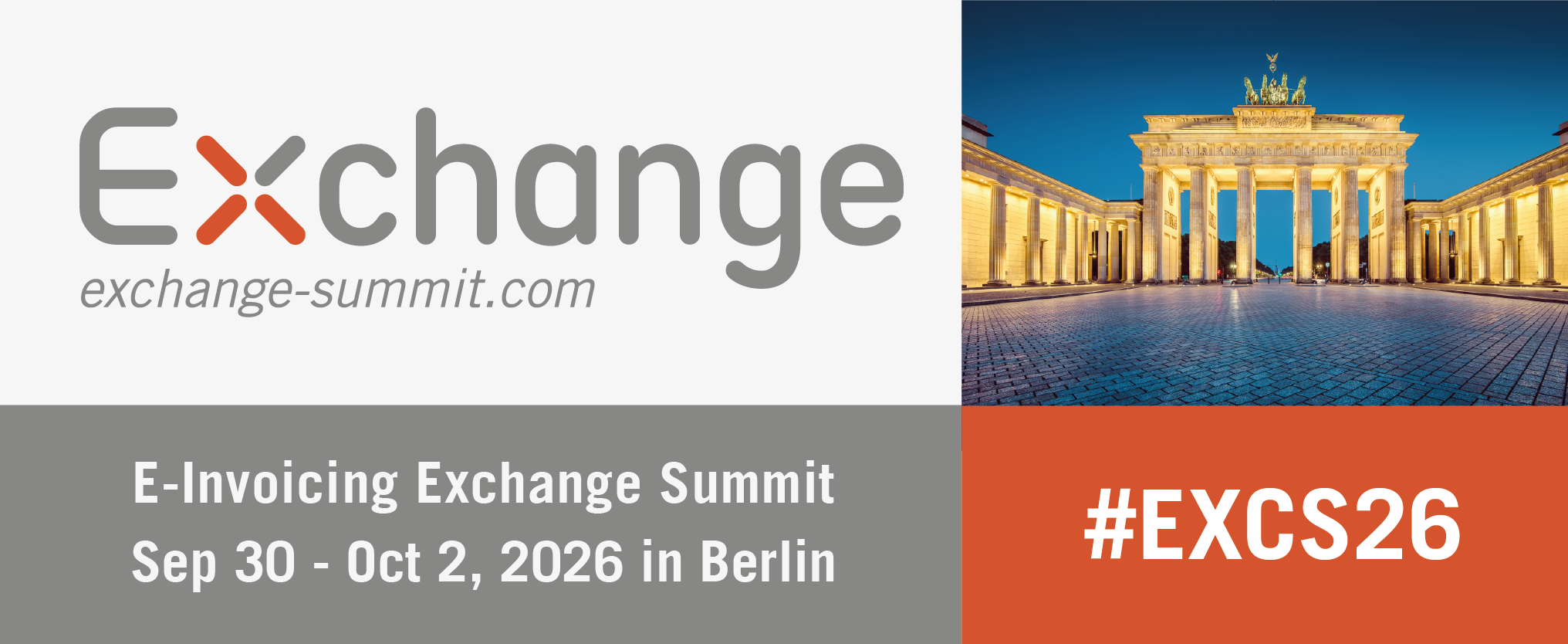
Next week, Berlin turns into ground zero for e-invoicing. More than a thousand finance, tax, and technology leaders are landing in the city for the E-Invoicing Exchange Summit Europe, and Babelway will be right there with them. If you’re a German SMB still treating your own country’s e-invoicing mandate as a someday problem, this is a good week to do the math.
Next week in Berlin: the E-Invoicing Exchange Summit Europe
Three days, one focus: making e-invoicing mandates work
From September 30 to October 2, the E-Invoicing Exchange Summit Europe brings together over 1,000 attendees from more than 50 countries. Day one is workshop-heavy, with a session on the EN 16931 revision (the European standard behind Germany’s XRechnung and ZUGFeRD formats) and fresh research from Politecnico di Milano’s International Observatory on e-invoicing. The two days that follow dig into ViDA implementation, Digital Reporting Requirements, Peppol network updates, and how multinational companies juggle compliance across several countries at once.
Find us there
Babelway will be on the ground for all three days. If you’re headed to Berlin too, or you’re weighing whether it’s worth the trip for a company your size, come find us. We’d rather talk through your actual deadline than a generic one.
Germany’s own mandate, in plain terms
Germany doesn’t need a conference to make this relevant. Its B2B e-invoicing mandate has been rolling out in phases since the start of 2025, and the next phase is closer than most people think.
Since January 1, 2025, every business in Germany, regardless of size, has had to be able to receive electronic invoices in a format that complies with EN 16931, usually XRechnung or ZUGFeRD. That part isn’t coming. It’s already here.
The issuing side lands in two waves. Companies with turnover above €800,000 have to start issuing compliant e-invoices on January 1, 2027. Everyone else follows on January 1, 2028, when paper invoicing for domestic B2B transactions is phased out entirely.
Why 2027, not 2028, might be your actual deadline

Here’s where the SMB label gets misleading. €800,000 in annual turnover sounds like a big-company number. For a lot of small and mid-sized businesses, it isn’t. A twelve-person services firm, a manufacturer with a handful of steady accounts, a company that just had a strong year: any of these can clear €800,000 in revenue while still thinking of themselves as small. If that’s you, your deadline isn’t 2028. It’s 2027, and right now that’s about three months away, holidays included.
Even well under the threshold, the receiving requirement already applies, and has since January 2025. If you can’t confirm your systems handle inbound XRechnung or ZUGFeRD files correctly, that’s not a future problem. It’s a today one.
What SMBs should do before their compliance date
The homework is the same whichever wave you’re in, just on a different clock:
- Confirm which turnover band you actually fall into, and plan around that deadline instead of the one that feels more comfortable.
- Check that you can already receive EN 16931-compliant invoices. That’s been required since January 2025.
- Map your current invoicing and accounting formats against what XRechnung and ZUGFeRD require.
- Connect your e-invoicing setup to your existing ERP or accounting system, both directions, rather than running it by hand.
- Test your invoice flows early enough to catch problems before they become deadline problems.
- Give your finance and AP/AR teams time to get used to the new process, not just the new software.
Babelway: e-invoicing sized for SMBs, not enterprise IT teams
Babelway is an EDI, Peppol, and B2B integration platform built to handle exactly this kind of requirement without turning a small team into e-invoicing specialists. It connects to your existing ERP or accounting system and handles the format conversion, XRechnung and ZUGFeRD included.
You can set it up yourself through Babelway’s self-service platform, no dedicated integration team required, or bring in our team if you want the extra hand. Either way, the point is the same: compliance that fits the size of the business handling it, not the size of the mandate requiring it.
The takeaway
Germany’s mandate is already underway, whether or not it’s been on your radar. The receiving requirement is live now. The issuing requirement lands in 2027 for a lot of businesses that don’t think of themselves as large, and in 2028 for everyone else. Either date is closer than the SMB label makes it feel.
Germany is also just one piece of a much bigger shift. We’ve walked through similar rollouts in Poland and Belgium, and the pattern holds everywhere: the businesses that start early have a much easier time than the ones that wait for the deadline to make the decision for them.
We’ll be in Berlin from September 30 to October 2, talking through exactly this with the people we meet there. If you can’t make the trip, the list above is a decent place to start on your own.